Food insecurity driving hidden mental health crisis, as millions struggle in silence

Food insecurity is taking a hidden toll on millions of people’s mental health and self-esteem, according to new research from award-winning social enterprise Community Shop. For many, the struggle to afford everyday essentials goes beyond financial hardship, leaving people feeling isolated, ashamed and, in far too many cases, without any support at all.
A third (32%) of people say experiencing food insecurity has negatively impacted their mental health, while three in ten (28%) say it has affected their self-esteem. The findings underscore the urgent need to address the emotional and psychological impact of food insecurity, alongside the immediate challenge of affording essentials.
The research, conducted via Opinium, surveyed people who have faced situations where they could not reliably afford food or essential goods such as toiletries, nappies or cleaning supplies in the last year - equating to 17% of UK adults.* The results highlight the significant scale of the issue, and its deeply intertwined emotional and psychological consequences.
Mental health prioritised
Addressing mental health and wellbeing emerges as a clear priority for supporting people experiencing food insecurity. Almost half (45%) rank good mental health as the most important aspect for quality of life, ahead of physical health (40%) and stable housing (32%), underlining that emotional wellbeing is not a secondary concern but a central issue for those navigating insecurity.
Women are particularly affected, reflecting the additional emotional and practical pressures of feeding a household. More than a third of women experiencing food insecurity (36%) say their situation has increased their ‘mental load’, while a fifth (22%) say they have only bought food for their family or children, and not themselves.
Barriers to accessing support
Despite the scale and impact of food insecurity, many people are not accessing help. Of the estimated 9.4 million people who have experienced insecurity, more than a quarter (27%) say they have not used any support system at all.
38% have considered using a food bank but chose not to, with many saying they would rather go without than seek help. Feelings of embarrassment, uncertainty about eligibility, and a belief that others are more deserving of support are key barriers for using emergency food support, leaving many people to manage both the practical and emotional impacts of insecurity alone. While emergency and crisis-based support plays an essential hand out role during periods of acute need, it can also feel transactional or stigmatising, particularly when support is limited to short-term ‘hand out’ provision without wider emotional or practical support.
A different approach to food support
In response to these challenges, social and community supermarkets have emerged as an alternative model of support. Designed to offer affordable food in a more dignified, community-based setting, they aim to reduce stigma while providing opportunities for wider support, connection and confidence-building alongside food access.
Although only 22% of people who have experienced food insecurity have used a social or community supermarket, seven in ten (69%) say they would use one if it were available locally. Support for this model is also strong among the wider public, with 61% saying they would recommend a community shop to someone who could benefit and would welcome one in their local area.
The community shop model
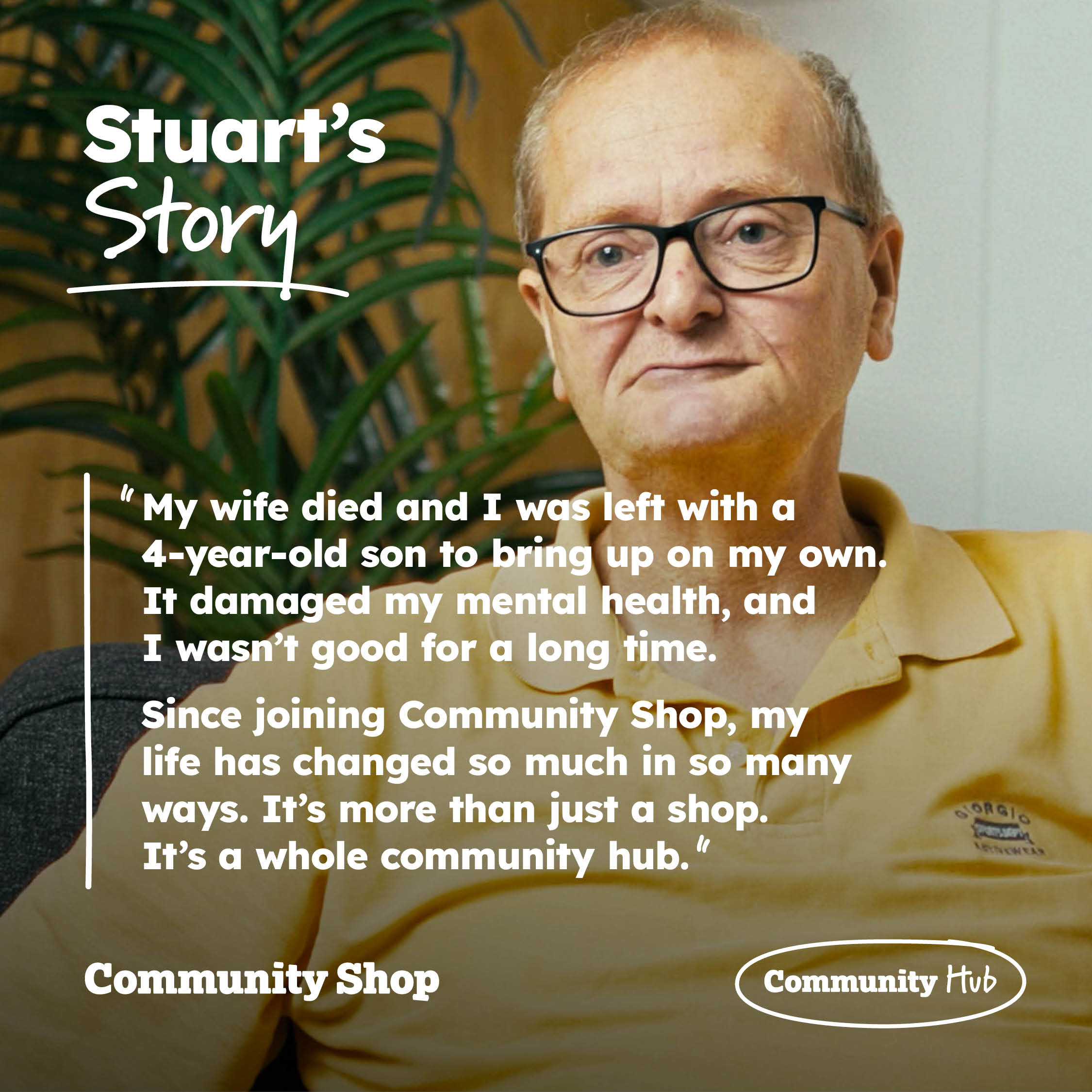
Award-winning social supermarket Community Shop is one example taking a different approach, aiming to tackle the root causes of food insecurity in communities experiencing social inequality. Rather than focusing solely on food access, Community Shop combines practical and emotional support through a three-space model designed to help people move forward with dignity.
Each Community Shop combines a Community Store offering deeply discounted food and essentials with a Community Hub providing tailored wellbeing, personal development and employment support, alongside a Community Kitchen that creates space for connection and confidence-building. This integrated model recognises that food insecurity is rarely just about food, but is closely linked to mental health, isolation and long-term financial insecurity.
Gary Stott, executive chairman of Community Shop, said: “When we talk to people who are struggling with food insecurity, they rarely say their biggest problem is not knowing how to budget. What they tell us is that having someone to talk to, support with mental health, and a pathway into work or training can be just as important as access to affordable food.
“Too often, support starts and stops at the point of crisis. There is a real need to build on community-based support models like ours that provide a longer-term hand up, not a hand out, addressing the wider impacts of food insecurity and helping people rebuild confidence, wellbeing and independence, rather than just meeting immediate needs. That’s why this kind of community support matters so much.”
* Almost a fifth (17%) of UK adults report that in the last year they have faced situations where they could not reliably afford food or essential goods such as toiletries, nappies or cleaning supplies. For some, the situation has been even more severe, as one in ten (10%) say they have gone an entire day without eating because they could not afford food.
SHARE